Lawn scarification is the process of raking a lawn with the intention of removing thatch. When carried out appropriately, it can lead to a healthier, greener lawn. To scarify efficiently, you’ll need a mechanical lawn scarifier with blades that penetrate the ground and remove the thatch.
While you may feel more comfortable hiring a lawn care service to carry out this work, in the following guide, we outline how scarification works, its importance, how frequently and how you should go about carrying out lawn scarification.
Following this guide will lead to a lusher, healthier lawn.
What is lawn scarification?
Lawn scarification is an operation that removes thatch from a lawn, and is also known as "dethatching", or "power raking".
Generally, some thatch is good for your lawn, around a few centimetres is good, as it protects the root of the grass while allowing nutrients through to the soil and grass roots. It also acts as a buffer against extreme temperatures and helps to prevent soil compaction.
The issue, however, with too much thatch is that it stops air, nutrients, and water from reaching the roots of the lawn, and therefore stops healthy growth and nourishment. It also creates an uneven lawn, and the latticework of partially decomposed material encourages disease.
What is thatch?
Thatch is essentially the side shoots of grass, which normally create a lush, thick lawn, but then die off to make way for new runners. As these grass shoots decompose, they produce a chemical called lignin, which makes the remaining material slow to break down further.
This dead grass then becomes intertwined with newer shoots of grass, and this composite is known as thatch. Thatch is often caused by environmental consequences, but it can accumulate excessively when lawns are neglected.
Natural factors that cause thatch include soils with a low pH or a high sand content, as they have fewer microorganisms to decompose thatch. Fertilising a lawn with too much nitrogen causes rapid growth of shoots in thatch, and overwatering prevents decomposition as it hinders microorganism health.
Oxygen flow can also be prevented by over-watering or soil compaction, which creates poor conditions for microorganisms.
What happens if there’s too much thatch?
Too much thatch, i.e., anything over half an inch, will need to be scarified. This is because excessive thatch has four key consequences.
Firstly, it prevents drainage, which means air and nutrients can’t reach the roots. Secondly, thatch can increase the risk of drought damage as grass roots are unable to embed in the soil. Thirdly, grass strains with shorter roots that are disease-prone are in favour of longer-rooted grass like that on golf courses.
Finally, thatch can also lead to further issues like weeds, fungal issues, and moss. Removing this lawn thatch allows the roots to receive these nutrients, and as a result, the grass is healthier and greener.
Do all lawns need scarification?

The simple answer to this is no. In fact, different types of grass produce varying levels of thatch. Grass types like ryegrass produce very little thatch, as it’s durable and therefore low maintenance.
If a ryegrass lawn hasn’t been scarified for several years, however, it will likely require scarification to clear any buildup. It also depends on the look you’re trying to achieve for your particular lawn, as ryegrass is dark and will therefore have a unique appearance.
To know if your lawn needs scarification, you’ll need to check for the appropriate level of thatch. It’s best not to scarify for the sake of it, as this can create more damage than good. To check for thatch, take samples using a hollow tiner. Digging from various places across your lawn down at least two inches, you will be able to see how much thatch is in the lawn.
What’s the best way to scarify a lawn?
It’s extremely important to be careful and not overdo scarification. Follow the steps below for successful scarifying:
01 — Prepare the lawn for scarification
This involves killing any weeds at least three weeks beforehand and gradually cutting the grass.
Around two weeks before you’re due to scarify, take off the top of the grass and then reduce the height slowly every few days or so, until it’s around 5cm in length.
A week before, a moss killer should be applied if moss is present, and any moss should be raked up the day before your scarification date.
02 — Scarifying the lawn
Scarification should be carried out with one key aim in mind: to minimise lawn damage. The quantity of coverage should be determined by how much thatch there is.
It’s recommended that you give it a first go, likely a second, and then reassess. Equipment for the job is easy to come across, as lawn scarifiers and similar tools like lawn aerators are widely available commercially.
a. First scarification stage

Try going along the border of the lawn and cover it in straight lines as you’d mow a lawn. Rake and gather up any grass clippings and thatch.
b. Second scarification stage

Cover the lawn with the scarifier at a diagonal angle, that’s 45 degrees to the first stage. This will help to prevent excessive lawn damage. Once again, collect any debris from the lawn.
c. Third scarification stage
Assess the situation of the lawn to see how much thatch is left. If it’s still visible, continue for a third or fourth time, each at a 45-degree angle to the last stage.
d. Final scarification stage
For the last stage, cut a quarter of an inch into the soil using the scarifier’s blades to create a perfect spot for new seed to be sown. I also recommend you watch Lawnsmith’s video on how to carry out scarification:
When is the best time of year for lawn scarification?
Lawn scarification can be a laborious process that will likely cause some initial damage to your lawn. The long term benefits do, however, outweigh the initial unsightliness. This is variable depending on how much thatch there is on the lawn.
If you do not have a heavy thatch layer, you should first consider lawn aeration. While both techniques are good for the health of the lawn in the long-term, they both stress the lawn in the short-term. You should generally try to avoid carrying out both techniques in the same season. For maintenance, we strongly recommend core aeration as it is less stressful than detaching.
Choosing the right time of year during which you scarify can help to promote growth and a speedy recovery. This most often means carrying out the process during warm, wet, and sunny weather. However, the scarification itself should always be carried out on a dry day on a dry lawn.
Otherwise, you may find wet thatch clogs up your scarifier much quicker, and it’s more difficult to tidy up.
Light scarification
For lawns with a little moss, light scarification or even raking can be carried out to repair your lawn in spring. The height of spring is the perfect time for this, as the weather should be warmer but still wet for recovery and growth. Good tools for carrying out this process include an electric rake or a hand scarifier. Spring is the best time for light scarification.
Heavy scarification
This is a risky process, but be can be required for lawns with heavy thatch, high levels of moss, or simply a dry patch. Heavy scarification could be followed by widely spaced lawn aeration, overseeding of seeds, and mild fertilising for optimal results, essentially replacing half the lawn.
Don't attempt it if the area will have high foot traffic in the month after. Autumn is the best time for heavy scarification; carrying out this process in spring could result in many weeds.
When is raking an alternative to scarification?
While scarifying is the best procedure for removing thatch from beneath the lawn surface, raking is best for removing moss. Moss doesn’t lie as deeply in the lawn, so it can simply be raked by a manual or powered model to pull the moss out of the grass. If there’s both moss and thatch in your lawn, it’s best to rake out the moss before carrying out scarification.
What’s the best equipment for scarifying?
The following tools will help in the scarification process:
- Adjustable height Lawnmower – cutting grass to simplify scarification, and to collect thatch instead of raking it up.
- Moss killer – if there’s an accumulation of moss, place the killer down at least a week before scarifying the lawn. The moss will become easier to identify and remove.
- Weed killer – if there are lots of weeds, prepare the lawn by spraying around three weeks before your planned scarification date. Ensure it won’t kill the grass too.
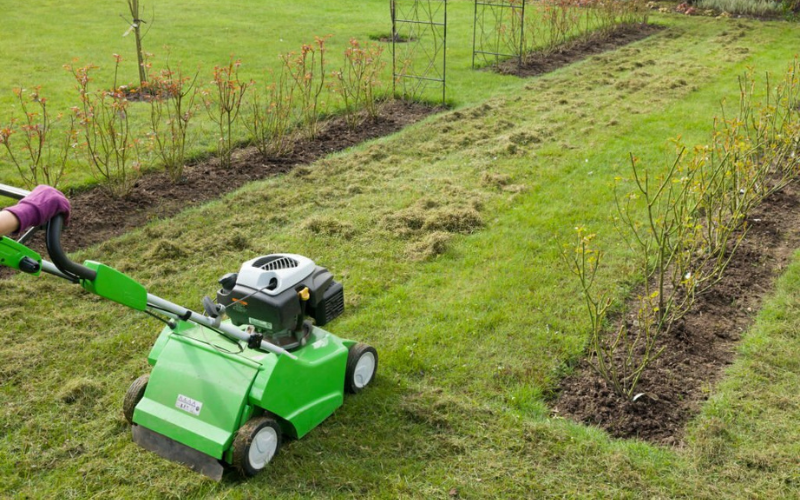
- Scarifier – required for removing the thatch from the lawn, this could be a manual, electric, or petrol scarifier.
- Rake – this will be helpful when gathering up moss and thatch brought to the lawn surface by scarifying.
- Grass seed – this is to outweigh the patchiness of the lawn
- Fertiliser – lawn nutrients are likely to be low and not to have passed into the soil, so a reputable fertiliser will help to restore these.
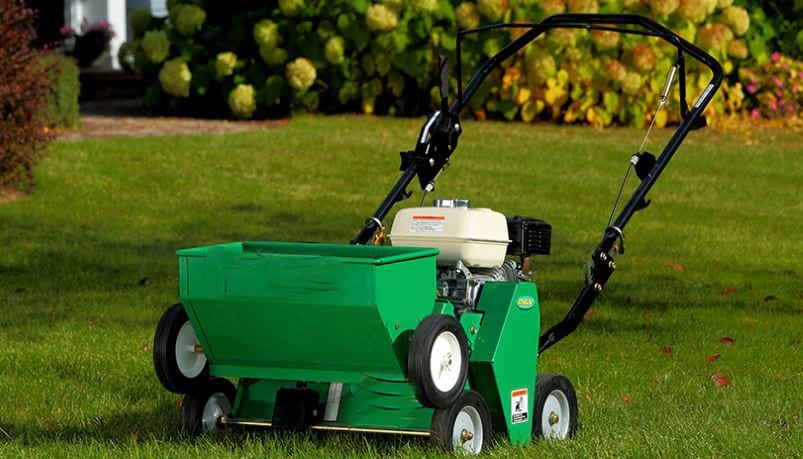
- Grass seed and fertiliser spreader – if the lawn is particularly large, this will help distribute both evenly, accurately, and quickly.
What’s the best way to use a scarifier?
There are two types of lawn scarifiers. A manual lawn scarifier is ideal for small lawns and simplifies the process. A powered scarifier is great for larger lawns and provides a quicker scarification process.
Using a manual lawn scarifier
The best way to use these is by applying a back-and-forth motion, while adjusting the depth of penetration that the blade makes into the ground. This can be done by tilting the handle, and will reach more thatch as a result.
Digging deep is particularly effective for aerating the ground for sowing grass seeds as part of the final step. Do bear in mind that this process can be time-consuming.
Using a powered lawn scarifier
Powered scarifiers really do speed up the process, as you can imagine.
It’s easy enough to adjust the height, and simply move across the lawn like you would a lawnmower. You can see just how much easier the process is with a powered scarifier from this video:
However, best practice is to first go gentle on the lawn to minimise damage, and very gradually adjust the height on the scarifier. When preparing the lawn for sowing seed, dig into the soil by about a quarter of an inch for sufficient penetration.
What’s the best post-scarification process?
Recovery is key. This is where the time of year is even more important. You can help to speed up the process through the following two processes:
- Overseeding: to allow for a healthy lawn with good coverage, and to avoid weeds, overseeding is really important.
- Fertilising: thatching often happens as a result of lawn malnourishment. The key nutrients required for a healthy lawn are:
- nitrogen (for growing grass and making it green)
- phosphorus (for encouraging roots to grow and seeds to develop),
- potassium (for making grass more durable and fending off disease and drought).
Fertilising your lawn after scarification will help new grass grow much quicker. This step is essential after seeding.
What’s the best preventative measure for excessive thatch?
As you can see, excessive thatch takes a long time and a lot of effort to recover from. So preventing the thatch in the first place is the best method. There are several steps you can take:
01 — Lawn aeration
Frequent lawn aeration encourages microorganisms, which can break down decomposed grass to prevent thatch.
This is the best way to prevent thatch in the long term; it will improve your soil so it is aerated and bioactive enough to get the thatch to decompose.
Aim to aerate areas of high traffic and lawns with heavy clay soil every year or two; other areas will benefit from an aeration roughly every five years.
02 — Scarification
Regular raking and light scarification when required can ensure that any thatch is removed before greater problems occur and heavy scarification is needed.
03 — Measured use of fertilisation
Providing all the nutrients required for a healthy lawn, while avoiding fertilisers with excessive nitrogen.
Note that overuse of fertilisers will cause thatch. The influx of nutrients will cause your grass to initially grow very quickly, which risks the structure of the grass blades growing much faster than the root system.
This can create problems with hydrating and supplying future nutrients to the grass because a plant can only absorb as much water and minerals as its roots allow.
04 — Not watering too frequently
Lawns can cope with short periods of drought, so be sure not to water too often to enable long-rooted grass to grow. When you do water your lawn, water it deeply.
 Mark Thompson
Final Thoughts
Scarification is an effective way to restore vitality to a tired lawn. Removing excess thatch improves airflow, water penetration, and nutrient uptake. When timed correctly and carried out with care, scarification brings denser turf, richer colour, and resistance to weeds, moss, and disease.
Remember, it's a corrective practice, not a routine task. So, assess your lawn’s thatch levels, choose the right season, and follow up with proper aftercare such as overseeding, light feeding, and appropriate watering.
Combined with regular aeration and balanced fertilisation, scarification becomes part of a long-term strategy for maintaining a resilient, lush, and visually appealing lawn that is the envy of the neighbourhood.