Every gardener wants a lush, green, and healthy lawn. However, true gardeners also care for their lawn responsibly, choosing treatments that won’t harm plants or the environment.
This article discusses both organic and chemical lawn treatments and explains why organic options are better for your lawn, garden, and the earth.
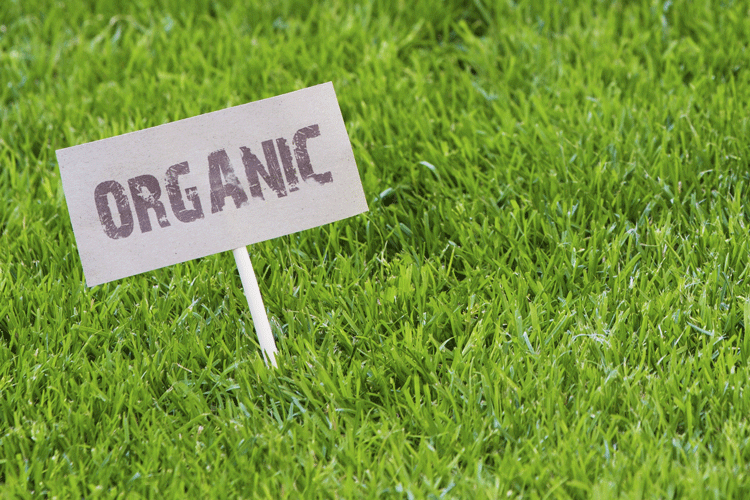
What is Organic?
In lawn care, the terms natural or organic generally mean that a product is minimally processed, with nutrients remaining in their natural forms rather than being extracted and refined.
Organic fertilisers are usually made from one or more of the following: plant waste, animal waste, and powdered minerals.
They are often sold as “soil conditioners” rather than fertilisers, as nutrient ratios can be difficult to guarantee.
Organic fertilisers may still be processed in a factory, but materials such as manure and compost are often produced on-site at farms.
What are Synthetic Fertilisers?
The most common type of fertiliser on the market is synthetic (chemical) fertiliser. These are man-made treatments designed to add nutrients to your lawn and are widely available at plant and gardening stores.
Chemical treatments come in several forms, including liquid, spike, granule, and pellet. These formats allow plants to absorb nutrients very quickly, delivering a fast-acting boost directly to the roots. This immediate effect is one reason chemical fertilisers are so popular.
Synthetic fertilisers are commonly used because they are readily available and cost-effective, making them high in demand. One advantage is their low cost, providing an inexpensive way to supply gardens with essential nutrients.
Do the Cons Outweigh the Pros?
The simple answer is yes. Synthetic fertilisers provide grass with macronutrients, but these nutrients can also cause damage.
Excess nutrients that are not absorbed immediately can build up in the soil, leading to issues such as fertiliser “burn” caused by dehydration. This process, known as over-fertilisation, can kill grass and damage the entire ecosystem.
While chemical fertilisers supply macronutrients, they typically lack micronutrients. Additionally, many are produced using non-renewable resources such as fossil fuels, making them harmful to the environment.
These chemicals can leach into local waterways and have been linked to health concerns, which is why many gardeners avoid using chemical treatments. Although chemical fertilisers promote plant growth, they do not improve soil health. Incorrect application can also result in plant damage or burning.
Chemical fertilisers remain widely used, but their long-term disadvantages often outweigh their short-term benefits.
Why You Should Choose Organic Lawn Treatment
Although chemical treatments are generally cheaper, there are many positive reasons to choose organic lawn treatments. Organic fertilisers provide a balanced, slow-release supply of nutrients that support natural lawn growth.
Similar to human diets, heavily processed products often contain additives and chemicals. The long-term effects of synthetic lawn treatments can be harmful, whereas organic treatments are less likely to damage plants, soil, or the surrounding ecosystem.
Less Watering
Organic lawn treatments help reduce water usage. Soil enriched with organic matter acts like a sponge, improving water retention and increasing drought resistance. Water and nutrients remain closer to plant roots, reducing the risk of drying out.
Organic treatments can prolong and improve plant health, resulting in stronger lawns that require less watering. While hybrid products that include organic components, such as Scott’s Lawn Builder, are an improvement, you can also create your own fully organic lawn treatment.
With organic treatments, grass grows more steadily, meaning you won’t need to mow as often. This leaves more time for planting shrubs, flowers, and trees.
A naturally grown lawn requires less ongoing maintenance because organic treatments regulate growth. In contrast, chemically treated lawns often experience rapid, uneven growth, leading to more frequent mowing.
How to Use Lawn Treatments
There are many ways to apply lawn fertilisers, depending on the type of fertiliser, the season, and the condition and variety of your grass.
Application rates can be generous, so it’s important not to overfeed your lawn. If your lawn appears unhealthy, avoid applying excessive fertiliser, as this can cause burning. Using smaller amounts more frequently is generally more effective than applying a large amount at once.
Fertilisers should be applied evenly across the lawn using appropriate applicators. For larger lawns, a spreader can save time and ensure consistent coverage.
Chemical treatments are also available as water-based mixtures that provide a quick release of nutrients for immediate absorption.