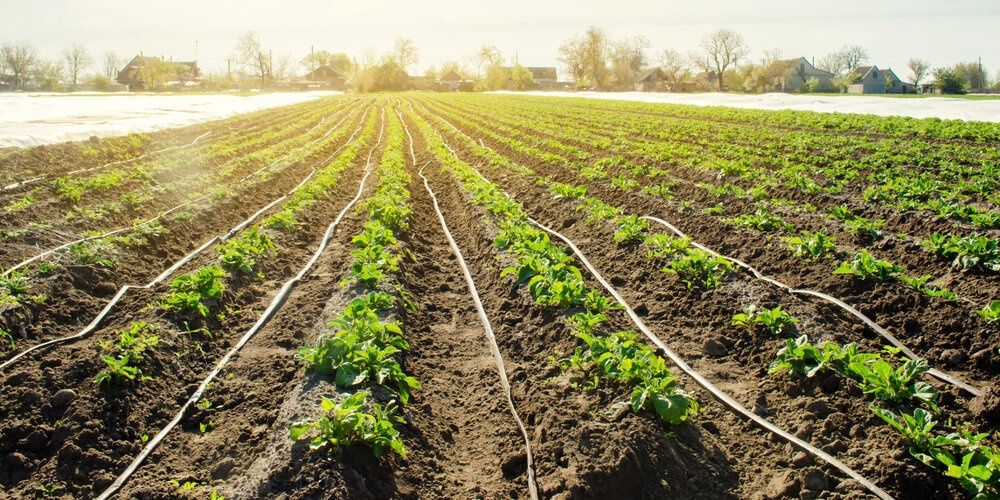
Proper irrigation is a key part of keeping a garden healthy, and drip irrigation is one of the most efficient ways to do it. It delivers water slowly and directly to where plants need it most, using a simple network of tubes and drippers.
Because the water goes exactly where it’s needed, drip irrigation helps reduce waste, limit evaporation, and lower your water bills. It also supports healthier plants by keeping the soil evenly moist, while avoiding excess water on leaves and surrounding areas. This makes it easier to control weeds and fungal problems that often occur with traditional watering methods.
Drip irrigation systems are easy to install for most standard gardens and don’t require specialised equipment. You’ll also find information on other irrigation options, such as sprinkler systems.
Map your garden
The first step requires garden mapping to establish how the irrigation system will be positioned and what plants it will be used on. It's important to work out the amount of water the different areas of your garden will need.
For optimal results, you should have individual pipes for every kind of plant that you have, since each plant group warrants a different watering amount. In fact, natives, vegetables, and fruit trees all require specific quantities of water, so you may want to have different irrigation zones.
Drip tubing
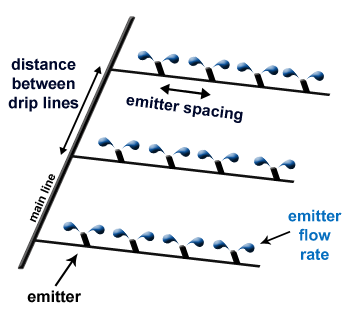
Backbone tubing starts at the water source and carries water through the main part of your drip irrigation system. The thicker this main pipe is, the higher the initial flow rate. The placement of drip holes along the tubing also affects how much water is delivered per square metre.
Micro tubing refers to the smaller tubes that connect emitters to the main line. This tubing is commonly available in vinyl or poly rolls. Vinyl tubing is softer and easier to handle, making it ideal for beginners. Poly tubing is firmer and slightly harder to work with at first, but it is more durable, resists UV damage, and does not expand when exposed to heat.
You can purchase pre-punched drip tubing from most garden centres, which already has holes spaced for emitters. Alternatively, non-perforated tubing allows you to create custom holes and insert emitters where needed. This option is best for irregular garden layouts, as it offers greater flexibility.
Dripline tubing has emitters built directly into the line at fixed spacings and flow rates. It is a time-saving choice for formal or evenly planted garden designs where uniform watering is required.
When planning your system, consider both water access and tubing length. To maintain adequate water pressure, tubing should not exceed 60 metres from the water entry point to the end of the line. If the water source is positioned in the middle, the total length can extend up to 120 metres. Drip tubing typically ranges from 12 mm to 20 mm in diameter, depending on plant and water requirements.
Finally, always seal the end of each line with an end cap. Without it, water will escape from the open end and flood that area of your garden.
Flow and emitters
Emitters are the devices that you insert into your drip tubing. The emitters must correspond with the tubing they are constructed for. If the tubing isn’t the right fit, the emitters will come off the fitting, or the installation will prove to be troublesome.
Emitters regulate water flow. There are several kinds of emitters with capacities that range from 2 litres/hour to 8 litres/hour. Most of the emitters are categorised based on how they regulate water, as well as the way they’re designed. The proper emitter type is required to control water flow.
You need to keep in mind the kind of plant being irrigated and how much water it will need each day.
“Mixing different emitter flow rates together on the same system is not a good idea. Pick a single flow rate and stick to it. Plants that need more water should have more emitters per plant”
Of course, that is an American site, and the brands of emitters available will be different in Australia, but it will definitely give you a good idea. Once you know the emitter flow rate you are getting from your chosen emitters, you can use this calculator to help you decide how many emitters you should use per plant.
Make sure you use this for each different type of plant and enter your correct local climate type. Also note that there are advantages and disadvantages of burying emitters underground, but generally it is discouraged for a simple home installation; however, if you wish, there are distinct emitters you can buy for underground emitter placement.
Flushing your drip system
Sediments settle over time because water flows slowly through a drip tube. Sediments will progressively accumulate and will need flushing out occasionally. This should be performed annually. Algae might also build up over time in tropical regions, and then you will need to flush more often than once a year.
Drip system considerations
For both connecting your water system to the hosepipe and connecting your hosepipe to the tubing, you may need a tubing adapter. Have a look at the ends of the tubing when you are in the garden store, and ask someone if you are unsure. It is best to use a separate hosepipe that you can buy at the same time as the tubing; keep your old hosepipe for other things.
It is essential always to use a backflow preventer if the source of your water is a clean water system. They stop water from travelling back in the wrong direction. This prevents the clean water from being contaminated by Salmonella, dirt, and various other types of bacteria.
Most drip systems are run at a reduced pressure in comparison to other water pipes. Water force can be slowed down with a pressure regulator, which is probably going to be necessary if water pressure is greater than 2.8 bars.
Emitters have very small holes, which can easily clog up. Water filtration is paramount, or you may end up needing to replace the tubing regularly, so a water filter should be used. This is true even if clean water is being used from your home because water coming from the house is not always totally pure; grains of sand and rust sometimes linger within the pipes. The filter will remove these fine particles from the water.