
Dragon fruit thrives in warm, frost-free climates, grows well in full sun or partial shade, and adapts easily to well-drained soil or containers. It is also highly versatile, so you can train it to climb or prune it to fit smaller spaces.
In this guide, you’ll learn how to grow dragon fruit from seed or cuttings, how to plant it in the ground or in pots, how to care for the plant, and when to harvest the fruit. Let's get started.
What Is a Dragon Fruit?
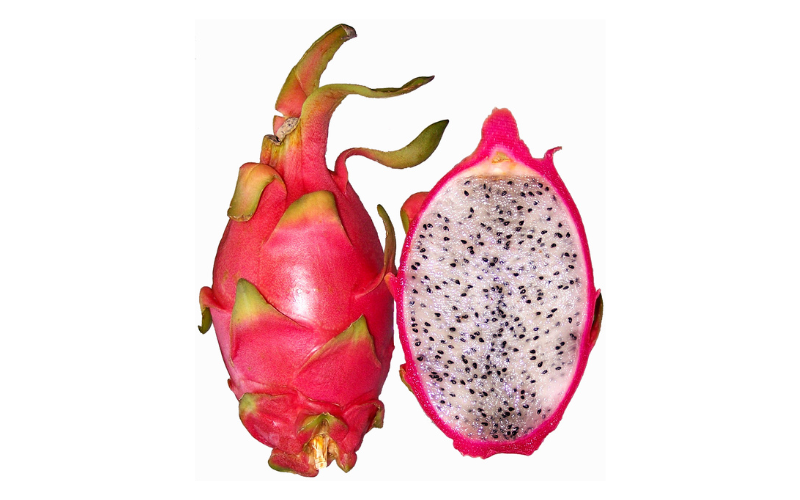
Dragon fruit (Hylocereus undatus) is a tropical fruit that grows on a climbing cactus. Its striking skin comes in a spectrum of shades, ranging from bright red and purple to yellow, offset by green scales.
Within, you'll find the flesh of white or red hues scattered with tiny black seeds. It has a mildly sweet flavour and a crunchy texture, similar to a kiwi or a pear. It is also low in calories but high in fibre, vitamin C, calcium, iron, and antioxidants. Beyond its culinary value, the dragon fruit doubles as an ornamental plant, a visually stunning and fragrant night-blooming flower.
Varieties of Dragon Fruit
Dragon fruit is available in many different varieties, with three of them particularly beloved among hobbyist gardeners. Let’s talk about them briefly:
Selenicereus Undatus
This variety has white flesh with pink or red skin. It is the most common and popular variety in Australia, favoured for its high antioxidant content. It has a mildly sweet and tangy flavour, laced with a hint of citrus. The fruit of this self-pollinating species is also known as Red Dragon Fruit, Pitahaya Roja, Red Pitahaya, or Hylocereus Undatus.
Selenicereus Megalanthus
Characterised by white flesh and yellow skin, this variety is not as widespread but is highly sought after. It has spiky skin that needs to be peeled off before eating. With a mild and sweet flavour, this species is high in iron and calcium. The fruit of this self-pollinating plant is also known as Yellow Dragon Fruit, Pitahaya Amarilla, Yellow Pitahaya, or Hylocereus Megalanthus.
Selenicereus Costaricensis
This is a rare variety, distinguished by its purple or red flesh and red or pink skin. The taste is sweeter and tangier compared to White Pitahaya. This cross-pollinating plant is also termed Costa Rican Pitahaya, Purple Pitahaya, Costa Rica Night-blooming Cactus, or Hylocereus Costaricensis.
Cultivating Dragon Fruit in Australia
The two most important factors in cultivating Dragon fruit in Australia are soil preparation and support or training. Let’s see how they affect the Dragon fruit.
01 - Soil Preparation
Dragon fruit plants prefer slightly acidic soil with a pH between 6 and 7. They need well-drained soil that does not retain water or become waterlogged.
Any free-draining soil will work, but choose loamy sand soil if available. They benefit from soil that is rich in organic matter, such as compost, seaweed, manure, or peat moss.
You may also need to add some lime to the soil to increase the calcium content and prevent blossom end rot. Make sure you’re planting this plant in an area that is free of weeds or grasses that can compete for nutrients and water.
02 - Support and Training
Dragon fruit plants are climbing cacti that need support to grow vertically and horizontally once they become 60 cm tall.
You can support them with a sturdy frame, trellis, or fence that is at least 1.8 m tall to hold the weight of the plant. You can also train them to climb and branch by tying the stems loosely to the support with soft twine or cloth.
Similarly, you can use a concrete post with a crossbar at the top for multiple plants. They can be pruned to encourage branching and fruiting by cutting off the stems’ tips after reaching about 0.9 m or 3 feet long.
Growing Dragon Fruit in the Garden
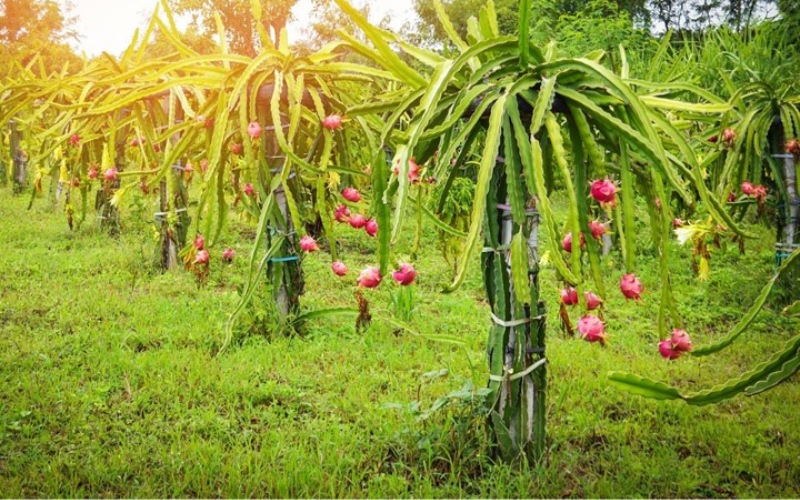
Growing dragon fruits from seeds takes 5 to 7 years to mature the plant. Alternatively, using cuttings can shorten this to 2 to 3 years. Let's explore how to grow the plant by either cultivation method.
1. Growing Dragon Fruit by Using Seeds
As established, growing dragon fruit using seeds in a garden is a long-term project, but for some hobbyists, the process is just part of the fun. The anticipation of watching a plant grow from a tiny seed to a fruit-bearing plant is a rewarding experience that's worth the wait. Below are the steps involved in growing a dragon fruit plant in the garden from seeds:
- Get the dragon fruit seeds from the market. Cut the fruit in half and scoop out the seeds. Wash the seeds and dry them overnight on a paper towel.
- Fill a seeding tray with moist soil that is well-drained and enriched with organic matter. Sprinkle the seeds on top of the soil and cover them lightly with more soil.
- Place the tray in a warm position but away from direct sunlight. Keep the soil moist but not soggy. The seeds should germinate within two weeks.
- Once the seedlings are about 10 cm tall, you can transplant them into garden beds in a sunny and wind-protected spot.
- Provide support for the plants with a sturdy frame made up of a central vertical post, at least 20 cm in diameter and 150 cm high, and a square frame or horizontal supports mounted on top.
- Fertilise and water the plants regularly but not excessively. Water them weekly during summer and reduce watering to once every two-to-three weeks during the cooler months.
The fruit typically takes 5-7 years to reach maturity, flowering, and fruit-bearing stages. You can confirm when they are ripe by their colour, which changes from green to pink or yellow depending on the variety.
2. Growing Dragon Fruit by Using Cuttings
On the other hand, if patience isn't your strongest virtue, you might opt for a quicker route. By growing dragon fruit plants from a mature plant's cutting, you're going to see results a lot sooner. Let's delve into how you can achieve this:
- Choose a sunny and warm spot in your lawn or garden that has well-drained, sandy, and slightly acidic soil. You can enrich the soil with organic matter and lime to improve its fertility and pH. Avoid areas that are prone to flooding or waterlogging.
- Prepare the cuttings to plant; you must first cure them by leaving them in a warm, dry area and waiting for their edges to turn white. This usually takes 4 to 5 days.
- Plant your dragon fruit plant cutting in the spring or fall when the soil temperature is above 15°C (60°F). Dig a hole that is slightly larger than the root ball of the cutting, placing it in the centre.
- Plant cuttings about 3 to 5 cm into the soil and then firm the soil around the cut. Water it well, then wait for the cuttings to develop roots over the next 3-4 weeks.
Remember to tie the stem of the cutting loosely to your support choice with soft twine or cloth and train it to climb and branch. Prune off any side shoots until the stem reaches the top of the support, then allow it to grow horizontally along the crossbar or fence. You may also cut off the tips of the stems after they reach about 3 feet (0.9 m) long to encourage branching and fruiting.
Growing Dragon Fruit in the Pot

Dragon fruits adapt well to pot cultivation. If you intend to grow the fruit in a pot, here's how to go about it.
1. Growing Dragon Fruit by Using Seeds
Up for the challenge? Here are the steps:
- First, choose a ripe and fresh dragon fruit and cut it in half. Scoop out the flesh with a spoon and place it in a bowl. Mash it with a fork to separate the seeds from the pulp.
- Rinse the seeds under running water and drain them well. Spread them on a paper towel and let them dry for a few hours or overnight.
- Fill a small pot with well-drained soil mixed with organic matter and sand. Moisten the soil lightly and sprinkle the seeds on top. Cover them with a thin layer of soil and press gently.
- Cover the pot with plastic wrap and secure it with a rubber band. Place the pot outside in a warm location but out of direct sunlight. You can use horticultural heating pads or grow lights if you have one.
- Watch for seedlings to emerge in about two to four weeks. Thin out the weaker ones and leave only the strongest ones to grow. When you see some small leaves projecting the seeds upward, remove the cover and moisten the soil again.
- Transplant them into larger pots or the ground when they are about six inches tall. Keep the soil moist but not soggy by misting it with water daily or using a spray bottle.
2. Growing Dragon Fruit by Using Cuttings
Here is the step-by-step guide to help you grow dragon fruit in a pot using plant cuttings:
- Choose a healthy and mature dragon fruit plant that has at least one fruit-bearing stem. Cut off a stem that is about 12 inches long and has at least two segments or nodes. Use a sharp and sterile knife or scissors and make a clean cut at an angle.
- Let the cutting dry for about a week in a shaded and dry place, such as indoors or under a tree. This will allow the cut end to heal and prevent rotting.
- Fill a large pot with well-drained soil mixed with organic matter and sand. Make a hole in the centre of the soil and insert the cutting about three inches deep. Firm the soil around the cutting and water it well.
- Place the pot in a sunny and warm spot, such as outdoors or in a greenhouse. Water the cutting regularly but moderately, keeping the soil moist but not wet.
- Watch for roots to develop in about four to six weeks. You can check by gently tugging on the cutting and feeling resistance. Once the cutting has rooted, you can transplant it to a larger pot or the ground.
Seeds or Cuttings: Which Is Better?
Growing dragon fruit from seeds has its appeal, but it requires patience. Plants grown from seed can take five to seven years to produce fruit. In contrast, cuttings usually establish faster and begin fruiting much sooner. While seeds offer genetic variation and the chance of new traits, cuttings are generally easier to grow and more reliable for fruit production.
Your choice may also depend on availability. Seeds and cuttings can be purchased from reputable nurseries or trusted online suppliers. If someone in your area already grows dragon fruit, you may also be able to obtain cuttings directly from their plants.
When selecting seeds or cuttings, choose healthy planting material. Look for firm, green stems without signs of wilting, cracking, browning, or rot. Avoid plants showing symptoms of pests or disease, such as spots, holes, webs, or visible insects. Healthy cuttings should also show root growth or developing buds, which indicate they are ready to establish successfully.
Best Climate to Grow Dragon Fruit
The optimal climate for growing dragon fruit depends on the variety and geographical location of the plant. Here are some general guidelines to follow:
- Dragon fruit plants thrive in warm, humid, and frost-free climates. They can tolerate temperatures up to 38°C (100°F) and down to 0°C (32°F), but they prefer temperatures between 18°C (65°F) and 32°C (90°F). The ideal temperature for growing dragon fruit plants is 21°C (70°F).
- Dragon fruit plants need at least six hours of direct sunlight per day, but they can also benefit from some partial shade in very hot or dry regions. They need protection from strong winds, as they can damage the stems and flowers.
- Dragon fruit plants flourish outdoors year-round in Australian climate zones 3 and 4. For those residing in cooler areas, these plants can be conveniently cultivated in pots and relocated indoors during the winter months.
Best Season to Grow Dragon Fruit
Choosing the right season is crucial for the successful cultivation of dragon fruit. Here's what to know before embarking on your dragon fruit growing journey:
- Dragon fruit plants can be planted in the spring when the soil temperature is above 15°C (60°F). The ideal temperature range for Dragon Fruit is between 15°C (60°F) and 26°C (80°F). They can also be planted in the fall. However, some protection from frost during winter may be necessary.
- The plant sprouts bright white flowers in spring which only last for one night. To see this stunning display, you'll need to visit your garden with a torch during the night or early in the morning. The flowers bloom only at night, usually between June and October, in temperate areas.
- Dragon fruit plants are prolific and can produce fruits several times a year, the frequency depending on the variety and climate. From flowering to ripening, the fruits take up to six months to mature.
How to Care for Your Dragon Fruit Plant?
This unique cactus-like plant requires specific care instructions to thrive and produce delicious fruits. Here's everything you should know:
Watering
- Water your dragon fruit plant regularly but moderately, keeping the soil moist but not wet. Avoid overwatering or under-watering, as both can cause problems for the plant.
- Dragon fruit plants need more water than other cacti but do not like soggy or waterlogged soil.
- They need regular watering during summer when they are actively growing and flowering and less watering during winter when they are dormant and susceptible to root rot.
- Dragon fruit plants should be watered when the top few inches of the soil are dry, but not the entire potting mix.
- They should also be watered thoroughly until the excess water drains out of the bottom of the pot or hole.
Fertilising
- Dragon fruit plants are light feeders that only need a few key nutrients. They’ll thrive with an organic fertiliser that is rich in nitrogen, phosphorus, potassium, and calcium.
- You can begin fertilising the dragon fruit plant with a half-strength fertiliser once the seedlings are firmly established.
- They should be fertilised once a month in spring and summer when they are producing new growth and flowers, but not in fall and winter when they are resting and storing energy.
- They should not be over-fertilised or exposed to chemical fertilisers, as they can burn the roots and stems.
Pruning
- Dragon fruit plants need pruning to maintain their shape, size, and productivity.
- They should be pruned in late winter or early spring before they start growing new stems and buds.
- You can prune the plant to remove the dead or damaged stems with a sharp, sterile knife or scissors or thin out overcrowded branches to ensure proper sunlight exposure and airflow.
- To prune, snip the tips of the stems after they reach about 0.9 m (3 feet) long to encourage branching and fruiting.
Harvesting
- Dragon fruit plants can produce fruits several times a year, depending on the variety and climate. They can take up to six months from flowering to fruiting.
- The fruits are ready to harvest when they are fully ripe, which can be indicated by the colour of the skin, the softness of the flesh, and the fragrance of the fruit.
- Harvest them by gently twisting or cutting them off from the stem with a sharp knife or scissors.
- Once harvested, dragon fruits can be stored at room temperature for a few days or refrigerated for up to a week.
Other Interesting Facts
The Dragon fruit has a mysterious and fascinating history that spans continents and cultures. Here are some interesting facts about the origin and evolution of the dragon fruit:
- Dragon fruit is known by several other names, including Pitahaya, Pitaya Roja, Strawberry Pear, Zamorano, Alice, Seoul Kitchen, Moonflower, and Lady of the Night.
- The exact origin of the dragon fruit is unknown, but it is believed to be native to Central America, Costa Rica, and Southern Mexico, where it grows wild on cacti. The indigenous people of these regions have been using the fruit as a food source for centuries.
- The dragon fruit was introduced to other parts of the world by Spanish explorers and traders who brought it to Asia, Europe, and Africa. It was especially popular in Vietnam, where it was cultivated by the French over a hundred years ago. Today, Vietnam is the world’s leading exporter of dragon fruits.
- The dragon fruit comes in different varieties, with different colours of skin and flesh. Each variety has its own flavour and texture, ranging from sweet to sour and soft to crunchy.
- The dragon fruit is not only delicious but also nutritious. It is low in calories but high in fibre, vitamin C, calcium, iron, and antioxidants. It can help boost your immune system, improve digestion, lower your cholesterol, and prevent chronic diseases. It can also improve your eyesight and blood pressure.
The next time you see a dragon fruit at the market or on your plate, take a moment to appreciate its amazing history and unique qualities.
Frequently Asked Questions (FAQs)
How long does it take dragon fruit to grow fruit?
It depends on whether you grow it from seeds or cuttings. Seeds can take up to seven years to produce fruit, while cuttings can take as little as two years to start producing fruits. The good thing is that once matured, the dragon fruit plant produces fruits for 5 months in a year, and they can bear fruits for more than three decades.
Is dragon fruit a natural or artificial fruit?
Dragon fruit is a natural fruit that grows on a climbing cactus called Hylocereus. It is native to Mexico, Central America, and South America, but it is now cultivated all over the world. It has different varieties with different colours of skin and flesh.
 Laura
Laura
Wrapping It Up
Dragon fruit is a tropical fruit that can be grown at home with the right conditions and basic care. With patience, you can produce fresh fruit while also adding a striking ornamental plant to your garden.
If you are interested in growing dragon fruit, start with healthy planting material, suitable growing conditions, proper care, and the plant will thrive and produce fruit. If you encounter challenges, local gardening experts or nurseries can provide practical guidance for your area.