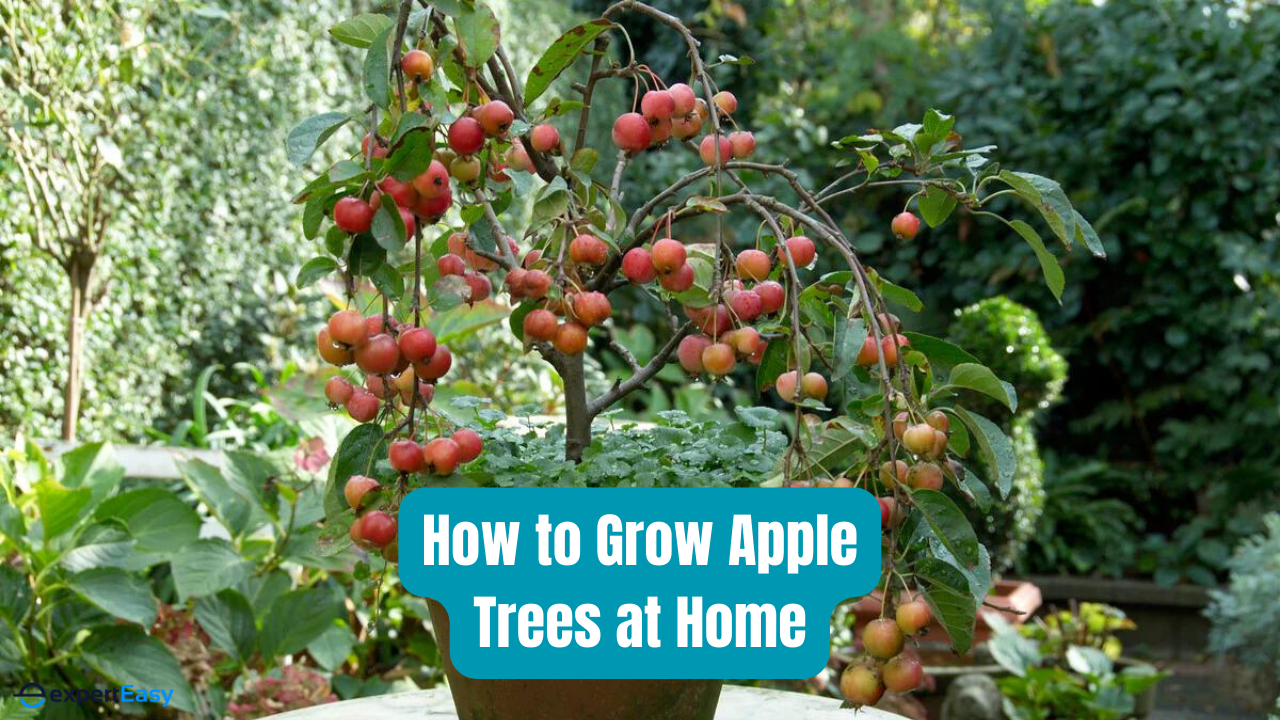
Apple trees are one of the most rewarding fruit trees to grow in your backyard. They produce crisp, flavourful apples while adding beauty and shade to your garden. However, growing them takes more than planting a seed and waiting. Its success starts with the right approach.
You must choose a variety suited to your climate, plant it in a sunny, well-drained location, water and fertilise regularly, prune to maintain health and shape, and protect it from pests and diseases.
In this guide, you’ll learn three methods for planting an apple tree, along with practical tips to help it thrive and produce fruit for years.
About Apple Trees
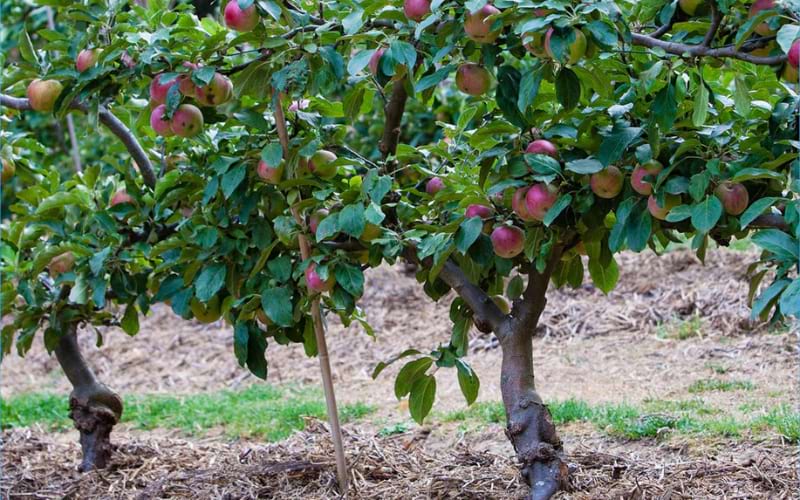
An apple tree is a fruit-bearing tree in the rose family that grows best in temperate regions. It has dark green oval leaves with serrated edges and produces white or pink blossoms in spring.
Bees and other insects pollinate these flowers, and the resulting fruits are round, varying in size, colour, flavour, and texture depending on the variety. Apples have thin skin, a seed-filled core, and crisp, juicy flesh that can be eaten fresh or cooked. While wild apple trees can reach up to 10 metres tall, cultivated trees are usually kept smaller through grafting and pruning.
Apple trees have been cultivated for thousands of years. In Australia, apple growing began when the First Fleet brought the first seeds in 1788. Since then, growers have developed many varieties suited to the country’s different climates and tastes. Today, Australia produces over 300,000 tonnes yearly, with over 90% grown for fresh consumption.
01 – Choosing the Apple Tree Variety
Choosing the right apple variety is the first step to successfully growing apple trees. With hundreds of varieties available, apples differ in size, colour, flavour, texture, ripening time, and storage life. Some are best for fresh eating, while others are better for cooking or juicing.
Three factors should guide your choice:
Climate
Apple trees grow best in regions with clear, warm and cold seasons so they can experience winter chill. This cold period allows the tree to break dormancy and produce flowers and fruit. Chill requirements vary by variety but usually range from 300 to 1,000 hours below 7 °C. In Australia, the popular Pink Lady apple needs about 500–600 chill hours per year.
Pollination
Most apple varieties are not self-fertile and require a compatible variety nearby for cross-pollination. This means planting two different varieties within about 50 metres of each other or grafting multiple varieties onto one tree. Some varieties, including Granny Smith, Golden Delicious, and Grimes Golden, produce fruit on their own, although cross-pollination often improves yields.
Space
If space is limited, consider dwarf or semi-dwarf apple trees. These smaller trees usually grow between 2 and 4 metres tall and wide. They can be grown in containers or trained along walls and fences as espaliers. They still produce full-sized apples, but generally in smaller quantities than full-size trees.
Popular Apple Varieties in Australia
- Red Delicious: Large apple with deep red skin and sweet, crisp flesh. Best eaten fresh or used for juice.
- Granny Smith: Bright green apple with tart, juicy flesh. Suitable for fresh eating and cooking.
- Fuji: Firm apple with red skin and very sweet flesh. Excellent for fresh eating and storage.
- Gala: Small red-striped apple with crisp, sweet flesh. Ideal for snacking or salads.
- Pink Lady: Medium apple with pink-red skin and a balanced sweet-tart flavour. Good for fresh eating and baking.
- Golden Delicious: Yellow-green apple with soft, sweet flesh. Suitable for eating fresh, cooking, or drying.
- Jonagold: Large red-yellow apple with crisp sweet-tart flesh. Good for both fresh eating and cooking.
- Braeburn: Apple with red-orange streaks and firm, spicy-sweet flesh. Good for fresh eating and storage.
- Cox’s Orange Pippin: Medium apple with orange-red mottling and aromatic, tangy flesh. Often eaten fresh or used for cider.
- Sundowner: Medium red apple with crisp sweet-tart flesh. Suitable for fresh eating and storage.
02 – Using a Seed
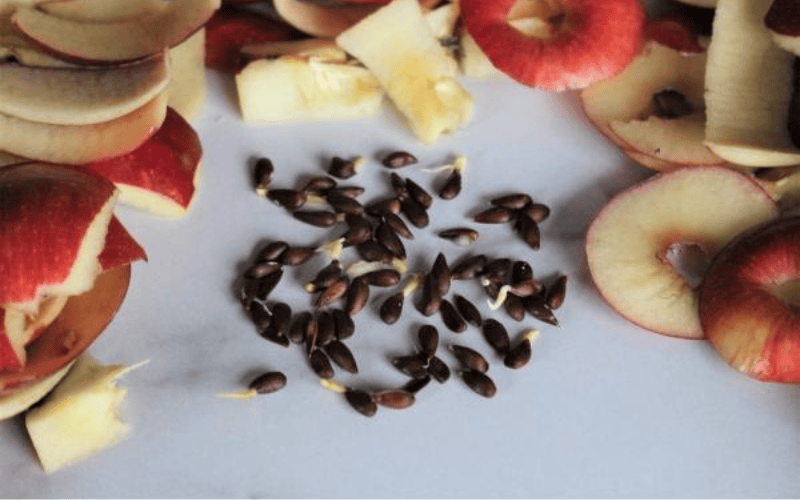
It may take 8 to 10 years for your apple tree to bear fruit from the seed. Here are the step-by-step instructions on how you can plant an apple tree using a seed.
- Collect two different kinds of seeds from an apple you like or buy apple seeds from a store. Make sure they are suitable for your climate zone and have compatible pollination requirements.
- Lay your seeds out to dry until there is no moisture on the outside shell.
- Cover your seeds with a damp paper towel and place them in a sealable plastic bag, jar or container. Put them in the fridge for 70 to 80 days to simulate winter and induce germination. This is called stratification.
- Prepare your pot and soil. Use a good potting mix and fill a small pot with drainage holes.
- Make a small hole in the soil with your fingertip, then drop the seed in and cover it with the soil. Water well and label the pot with the seed variety.
- Keep the soil slightly moist but not soggy, and place the pot in a warm and bright spot, such as a windowsill. You should see sprouts emerge in a few weeks.
- When the strongest seedlings are a few inches tall, transplant them to the ground if the weather is suitable. Choose a sunny and sheltered spot with deep, rich and well-drained soil. Dig a hole twice as wide and as deep as the root ball, and plant the seedling properly. Water well and mulch with organic material.
- Care for your apple tree by watering moderately and deeply, fertilising with a balanced fertiliser in early spring and late summer, pruning annually in late winter or early spring, and controlling pests and diseases with organic or non-organic methods. You can also thin out the fruits to improve their size and quality.
03 – Using a Graft
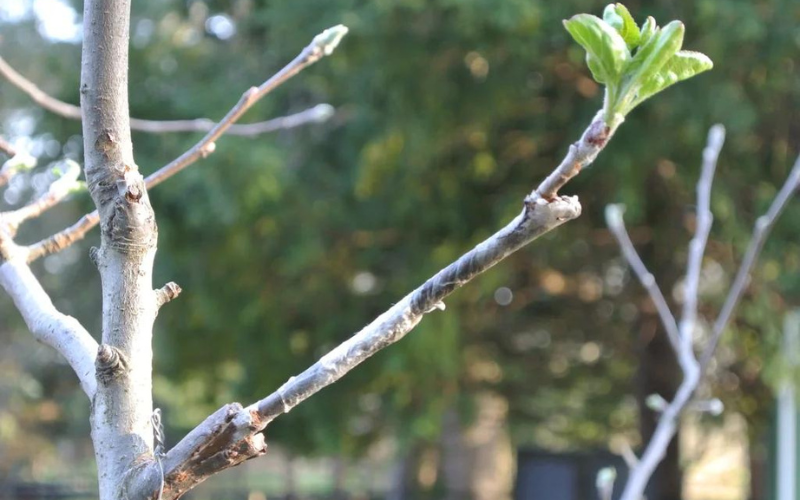
Grafting in propagation involves joining a part of a plant (scion) to another plant (rootstock) for the two parts to grow together and form a new plant. For apple trees, it may take 2 to 3 years to bear fruit from grafting. Here’s how to do that:
- Buy or source a healthy and suitable rootstock and scion for your apple tree. The rootstock controls the size and vigour of the tree, while the scion determines the fruit variety you want to grow. Make sure they are compatible and suitable for your climate zone and pollination requirements.
- Choose a sunny and sheltered spot with deep, rich, and well-drained soil to plant your rootstock. Dig a hole twice as wide and as deep as the root ball, and make sure the graft union is above the soil level. Water well and mulch with organic material.
- Choose a dormant season, such as late winter or early spring, to graft your scion onto your rootstock. Cut a healthy shoot from your scion variety that has at least three buds on it. Cut off any leaves or flowers from the shoot.
- Make a slanting cut at the base of the scion shoot, about 2 inches long. Make a matching cut at the tip of the rootstock branch where you want to graft it. The cuts should be smooth and clean, without any ragged edges or splits. Also, it should be at least 5 cm above the soil level to prevent root formation on the cutting.
- Fit the scion onto the rootstock, making sure that the cambium layers (the green layers under the bark) of both parts align well. The cambium layers are responsible for transporting nutrients and water between the roots and leaves, so they need to be in contact for successful grafting.
- Wrap the graft union tightly with grafting tape, rubber bands or strips of cloth to hold it in place and prevent moisture loss. Cover the tape with grafting wax, sealant, or paint to protect it from infection and drying out.
04 – Using a Young Plant
Your apple tree may start bearing fruit in the same year or the next year after planting a young plant, depending on the age and variety of the tree. Here is the drill:
- Buy or source a healthy and suitable young apple tree from a nursery or online supplier. Make sure it is suitable for your climate zone and pollination requirements. You can choose from dwarf, semi-dwarf or standard-size trees, depending on your space and preference.
- Choose a sunny and sheltered spot with deep, rich and well-drained soil to plant your apple tree.
- Dig a hole twice as wide and as deep as the root ball and plant the young plant properly.
- Water well and mulch with organic material. Take good care of your plant throughout the year.
How to Plant an Apple Tree in a Pot or Container
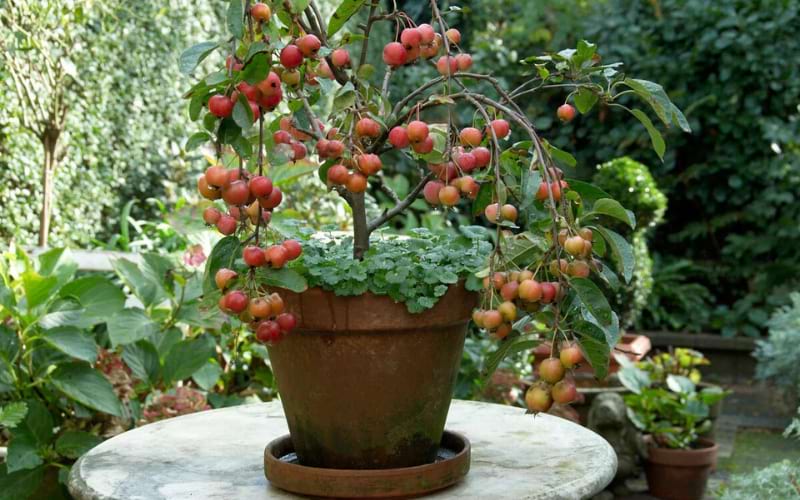
While it's possible to coax an apple tree to life from a seed or a graft, bear in mind that you may have to twiddle your thumbs for good before your tree decides it's ready to start producing fruit. I would recommend using a young plant to grow an apple tree in a pot or container. Here are the step-by-step instructions for planting an apple tree in a pot or container:
- Choose a suitable apple variety. Some of the apple varieties that are suitable for containers are Granny Smith, Red Delicious, Gala, Golden Delicious, Cripps Pink, Braeburn, Honeycrisp, Fuji, McIntosh and Crabapple. These varieties are either self-fertile, disease-resistant, cold-hardy or adaptable to various conditions. You can also choose a columnar or espaliered form for space-saving.
- Choose a large and sturdy container with drainage holes. The container should be at least 50cm in diameter and 40cm in depth, but bigger is better. You can use plastic, metal, ceramic or wooden pots, but make sure they are strong enough to support the weight of the tree and the soil. You can also get a wheeled base to put the pot on so you can easily move the tree around. Find the best plant pots, planters and baskets here.
- Fill the container with a good potting mix or a mix of compost and regular garden soil. Place some gravel or broken clay pot shards at the bottom of the container to facilitate drainage prior to planting the tree. You can also add some blood, fish and bone meal to the mix for good root establishment.
- Plant the young apple plant in the container. Back-fill with more potting mix or compost and soil mix, firming it gently as you go. Water well and mulch with organic material to lock in moisture and keep out weed seeds.
- Place the container in a sunny and sheltered spot that gets at least six hours of direct sunlight per day. Raise the container up on pot feet to help excess moisture drain away. You may need to move the container around to follow the sun or avoid frost during different seasons.
- Enjoy your apple tree, as it may start bearing fruit in 1-2 years after planting, depending on the age and variety of the tree. You may also need another compatible variety nearby for pollination unless you have a self-fertile variety.
Best Growing Conditions for an Apple Tree
Apple trees are versatile and adaptable plants that can grow in a range of conditions, but they do have some preferences that will help them thrive and produce quality fruits. Here are the best-growing conditions for an apple tree:
Soil
Apple trees prefer deep, rich, and well-drained soil that is slightly acidic (pH 6-7). They can tolerate clay or sandy soil but not waterlogged or excessively dry conditions.
To improve the soil for planting, dig a hole twice as wide and as deep as the root ball of your apple tree and mix in some organic matter, such as compost or manure. This will also improve the soil structure, drainage, fertility, and moisture retention.
Avoid planting apple trees in areas where the soil is too alkaline, saline, or compacted, as this may affect their nutrient uptake and root development.
Light
When it comes to selecting the perfect patch in your garden for your apple tree, remember this golden rule: the sunnier, the better. Apple trees bask in full sun, demanding a solid 6 hours of unfiltered sunlight each day, particularly during the fruitful growing season. Sunlight is the magic ingredient that catalyses the growth of robust branches, verdant leaves, and delectably sweet apples.
Avoid tucking your apple trees away in shady nooks or crowded corners where they might find themselves embroiled in fierce competition for light with other plants. Remember, your apple tree is a bit of a sunlight hog, and rightfully so.
Indoor apple plants, however, play by slightly different rules. With no access to direct sunlight, the answer is a grow light. Just as apple trees need a good six hours of sunlight outdoors, indoor apple plants will thrive with exposure to growing lights for 12-14 hours a day.
Temperature
Apple trees need a warm and cold season to grow and fruit well. They need a period of winter chill, when the temperatures are between 0°C and 7°C, to break dormancy and initiate flowering. The amount of chill hours required varies depending on the variety, but generally ranges from 300 to 1000 hours per year.
They also need a warm and frost-free spring and summer, when the temperatures are between 15°C and 30°C, to support pollination, fruit set, and ripening. Avoid planting apple trees in areas where late frosts or extreme heat may damage the blossoms or fruits.
Humidity
Apple trees prefer moderate to high humidity (50-70%), which helps them to prevent water loss and maintain turgor pressure.
However, they can tolerate dry or humid conditions as long as they are watered regularly and protected from fungal diseases. In this case, water the plant enough to reach the moisture content of 50-70% of the field moisture content of the soil.
Avoid planting apple trees in areas where the humidity is too high or too low, as this may affect their growth and fruit quality. You can use a humidifier to increase the humidity level inside your home, or you can use a humidity controller to prevent the too-high or too-low humidity levels.
Season
The optimal time to plant your apple tree is during winter's chilly embrace when it lies dormant, and its roots are bare.
This period of slumber gives the tree ample opportunity to get its roots settled and ready for a springtime burst of growth. On the other hand, if you've got a potted apple tree raring to go, you have the freedom to plant it throughout the year.
However, heed this piece of advice from the wise garden sage: steer clear of planting during the scorching highs of summer or the frosty depths of winter. Both extremes can be a bit harsh on your budding tree.
How to Care for an Apple Tree
Apple trees are relatively easy to care for once they are established. They require regular watering, fertilising, pruning and pest control to ensure healthy and productive growth.
Watering
Apple trees need moderate watering during the growing season, especially when they are young or bearing fruit. Water deeply and infrequently, rather than shallowly and frequently, to encourage deep root development. Avoid overwatering or underwatering, as this can cause stress and affect the fruit quality. Mulch around the base of your apple tree to retain moisture and prevent evaporation.
Fertilising
Apple trees need balanced fertilisation to support their growth and fruiting. Apply a complete fertiliser, such as blood and bone or citrus food, in early spring and late summer. Avoid over-fertilising, as this can cause excessive vegetative growth and reduce fruiting. If your soil is very acidic or alkaline, you may need to adjust the pH with lime or sulphur.
You can find some of the best fertilisers to plant your apple tree in Australia from Bunnings, Levity Crop Science, or Katek Fertilisers Australia. Other organic alternatives are Compost, Biosolids, or BioAgPhos.
Pruning
Apple trees need annual pruning to maintain their shape, size and productivity. Pruning also improves air circulation and sunlight penetration, which reduces the risk of diseases and pests. The best time to prune your apple tree is in late winter or early spring, before the buds break.
Use sharp pruning shears to remove any dead, diseased or damaged branches, as well as any crossing or rubbing branches. Thin out any crowded or weak branches to open up the centre of the tree. Cut back any long or vigorous branches to encourage lateral growth and fruiting spurs.
Good Hygiene Practices
You should practice good hygiene and sanitation when dealing with pests and diseases, such as washing your hands and tools before and after handling the plant, isolating any affected plants from others, disposing of any infected plant material properly, etc.
You should also wear gloves when handling this plant, as it can cause skin irritation due to its calcium oxalate crystals. This will help to prevent the spread of pests and diseases to other plants and avoid reinfection. Also, wear suitable gardening equipment for enhanced protection and safety while dealing with plant pests and diseases.
Managing Pests and Diseases
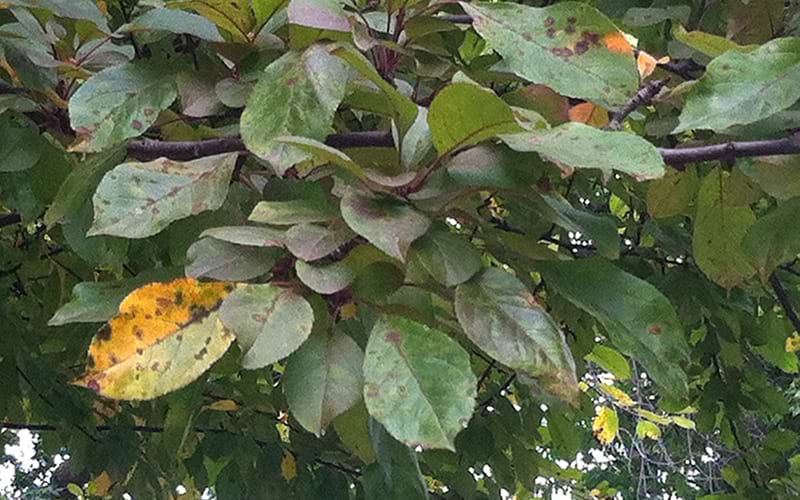
Apple trees are susceptible to various pests and diseases that can affect their growth and fruit quality. To tackle these problems, you need to identify the symptoms, apply the appropriate control measures and prevent future infestations. Here are some steps to take to deal with the common pest and disease problems of an apple tree:
- Aphids: These are small, sap-sucking insects that cluster on the undersides of leaves and stem, causing curling, yellowing and distortion. To control them, you can spray your apple tree with a systemic insecticide, a biological control (such as ladybugs or lacewings), or a homemade solution of water and soap. You can also prune and dispose of any infested branches or leaves.
- Apple scab: This is a fungal disease that causes black or brown spots on the leaves and fruits, leading to premature leaf fall and fruit rot. To control it, you can spray your apple tree with a fungicide, such as Luna Sensation, before the buds open in spring and repeat every 10 to 14 days until harvest. You can also rake and destroy any fallen leaves or fruits that may harbour the spores of the fungus.
- Codling moth: This is a pest that lays eggs on developing fruits, and the larvae burrow into the flesh, leaving brown trails and holes. To control it, you can use pheromone traps to capture the adult moths in spring and summer or spray your apple tree with an insecticide, such as spinosad or carbaryl, when the petals fall and repeat every 10 to 14 days until harvest. You can also remove and destroy any infested fruits or pupae that may be hiding in the bark of the tree.
- Fire blight: This is a bacterial disease that causes wilting, blackening and dieback of the shoots, leaves and flowers, as well as oozing of a sticky liquid from the infected parts. To control it, you can prune and dispose of any infected branches at least 12 inches below the visible symptoms, disinfecting your tools between cuts. You can also spray your apple tree with a bactericide, such as streptomycin or copper, during bloom time and repeat every 3 to 5 days until petal fall.
- Powdery mildew: This is a fungal disease that causes white or grey powdery patches on the leaves, stems and fruits, reducing their vigour and quality. To control it, you can spray your apple tree with a fungicide, such as Belanty, sulphur or neem oil, when the first signs of infection appear and repeat every 7 to 10 days until harvest. You can also prune and dispose of any infected branches or leaves to improve air circulation and reduce humidity around the tree.
When to Harvest Your Apples?
The time to harvest your apples in Australia depends on the variety of apples and the climate of your region. Here are signs to check if your apples are ripe and ready to harvest:
- Colour: Apples tell you they’re ripe by losing the last traces of their green background colour and developing full, bright colour. The inside of the apple’s colour will also give you an indication if it’s ready. The flesh should be white or cream - not green. The seeds should also be dark brown instead of white.
- Ease of separation: When your apples are ripe, they should be fairly easy to pick from the tree with a simple upward twist of the apple. If you have to pull hard or tug on the fruit, it is probably not ripe yet.
- Pip colour: The colour of the pips or seeds of the apple is another indicator of ripeness. They should be dark brown or black when the apple is ready to pick. If they are white or light brown, the apple is not ripe yet.
- Taste: The most reliable way to tell if an apple is ripe is to taste it. A ripe apple should be sweet, juicy and crunchy. If it is sour, dry or mealy, it is either unripe or overripe.
How to Store Your Apples?
Apples can be kept reasonably well at room temperature for five to seven days, but it is suggested to keep them in a slightly dampened Swag in the fridge until the day before you’re ready to eat them.
Placing apples in the fridge or cold storage slows the ripening process and can keep the apples fresh for a few weeks. You can also keep your apples fresh for up to a year or more by keeping them in a controlled storage.
The reduced oxygen and increased carbon dioxide levels in these areas inhibit the production and action of ethylene, the hormone that triggers ripening. However, this method requires special equipment and monitoring and may affect the flavour and texture of some apple varieties.
Frequently Asked Questions (FAQs)
Here are some frequently asked questions about growing apple trees.
What is the easiest apple to grow?
Some of the apple varieties that are generally considered easy to grow are Granny Smith, Red Delicious, Gala, Golden Delicious, Cripps Pink, Braeburn, Honeycrisp, Fuji, McIntosh, and Crabapple. These varieties are either self-fertile, disease-resistant, cold-hardy, or adaptable to various conditions. You can choose one or more of these varieties based on your preferences and needs.
Can apples grow in cold climates?
Yes, apples can grow in cold climates, as long as they receive enough chill hours (temperatures between freezing and 7 degrees Celsius) during the winter to break dormancy and initiate flowering.
How long will an apple tree take to bear its first fruit?
Generally, dwarf apple trees (which grow up to 10 feet tall) will start bearing fruit 2 to 3 years after planting, semi-dwarf apple trees (which grow up to 15 feet tall) will start bearing fruit 3 to 4 years after planting, and standard apple trees (which grow up to 30 feet tall) will start bearing fruit 6 to 10 years after planting.
Which soil is best for growing apple trees?
Apple trees prefer deep, rich, and well-drained soil that is slightly acidic (pH 6-7). They can tolerate clay or sandy soil but not waterlogged or excessively dry conditions. To improve the soil for planting, dig a hole twice as wide and as deep as the root ball of your apple tree and mix in some organic matter, such as compost or manure.
What are the four most popular apples in Australia?
According to Hort Innovation Australia, the most popular apple in Australia is Pink Lady, followed by Royal Gala, Granny Smith, and Fuji. Pink Lady apples are known for their pink-red skin, crisp texture, and sweet-tart flavour. They are suitable for eating fresh or cooking. Royal Gala apples are known for their yellow skin with red stripes, juicy flesh, and mild flavour. They are best for eating fresh or juicing.
 Laura
Laura
Wrapping Up
Growing apple trees at home can be highly rewarding, but it does require some planning and care.
Choosing the right variety, tree size, and planting method for your space and climate is essential. You also need to provide suitable growing conditions and regular maintenance to keep the tree healthy and productive.
With the right approach, you can enjoy fresh, crisp apples from your own backyard while also adding shade and beauty to your garden.