
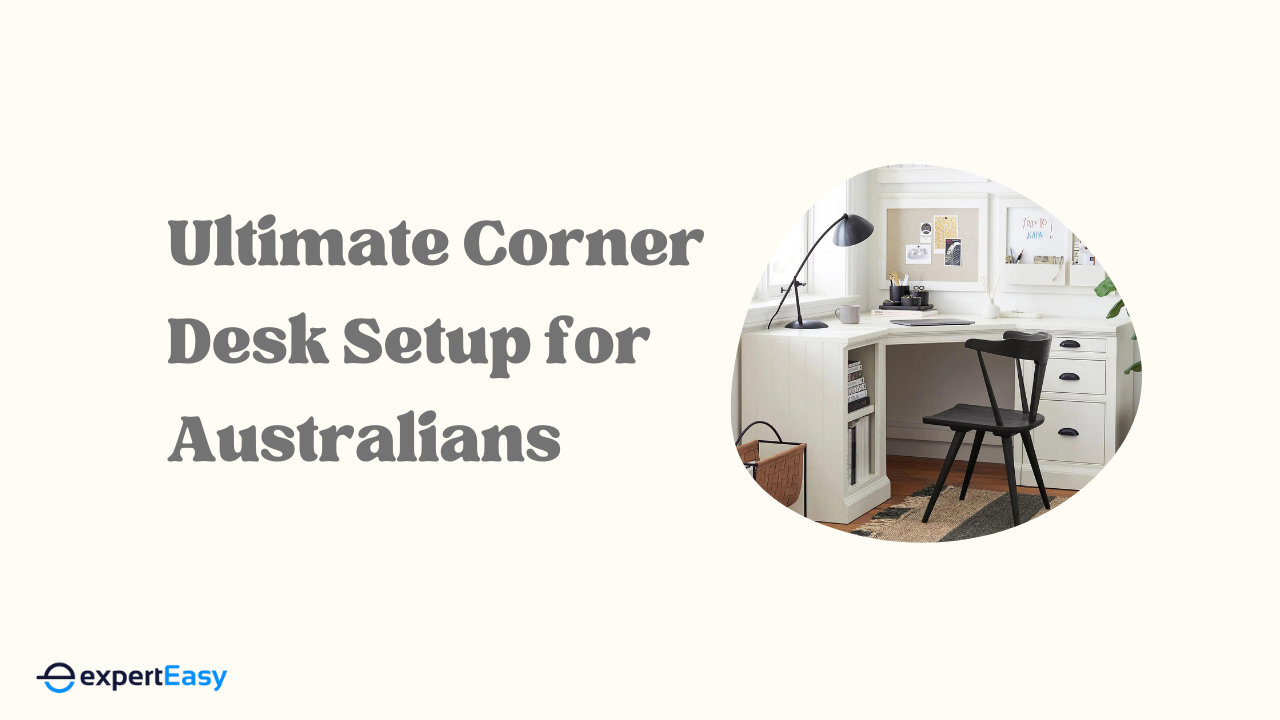
Many Australians continue to work from home, making a functional home office more important than ever. A corner desk setup is an efficient way to organise your workspace, helping you stay productive while using minimal floor space.
These setups can be simple, creative, or highly customised. The key is to prioritise ergonomics so you remain comfortable during long work hours. This guide explains how to build an effective corner desk setup that improves both comfort and efficiency in your home office.
Corner Desk Setup: At a Glance
To set up a corner desk in your home office or workstation, there are four steps to follow.
- Step 1: Pick the ideal corner in your home or office.
- Step 2: Choose a fitting corner desk, i.e., if you don't have one already.
- Step 3: Set up your corner desk ergonomically.
- Step 4: Personalise your corner desk with decorations.
We'll go over each of these steps below, providing expert tips and value to get the most out of your corner desk.
Step 1: Picking the Ideal Corner

Start your corner desk setup by selecting the optimal setup spot in your room. Here are five essential factors to consider:
Lighting
Consider the lighting in your room. You’ll want to position your desk in a place that has good lighting to reduce eye strain. An area close to the window for natural lighting is always ideal.
Noise
Considering the noise level in your room, position your desk in a place that is quiet and free from distractions. Be careful in doing so that you don't reduce or block access to good lighting and ventilation.
Outlets
Consider the location of electrical outlets in your room. Position your desk near an outlet so that you can plug in your computer and other devices. Remember that you can always use an extension to extend outlets in your room.
View
Consider the view from your room. You’ll want to position your desk in a place that has a good view, if possible. This helps reduce your stress levels and keeps your mind refreshed.
Space
Consider the amount of space you have available for your corner desk setup. You’ll need to measure the length, width, and height of the corner walls before purchasing a corner desk. Once you have these measurements, you can use them to find a corner desk that will fit in your space.
Step 2: Choosing the Right Corner Desk

You have your ideal space, it’s time to find the ideal desk—supposing you don’t already have one. To choose the right corner desk for your needs, you should consider the following factors:
Shape:
A corner desk should conveniently fit into the corner of a room and save you a lot of space. Thus, examine its shape to choose the appropriate option. For example, triangular desks are good for small spaces, L-shaped desks are good for large spaces, and standing desks are good for health and comfort.
Function
What do you need your desk for? Do you need a lot of working space, storage space, or equipment? Do you need a desk that can adjust in height or angle? Do you need a desk that can be used for multiple purposes, such as gaming, reading, or relaxing? Choose a desk that meets your functional needs and preferences.
Style
Desks may be made of actual wood or have a wood-look appearance. They may also have different colours, finishes, and designs. Choose a desk that matches your style and the decor of your room. You can also personalise and decorate your desk with accessories or items to make it more appealing and enjoyable to use.
Size
For size, different factors come into play, including your use case and room space. You will find three types of corner desks in the market—more on this below. You should measure the space available in your room and the size of the desk before buying it. Make sure the desk is not too big or too small for your space and your needs.
Price
Of course, the price range of corner desks is varied. You should set a budget and look for a desk that fits within your budget. You should also compare the quality, features, and durability of different desks and choose the one that offers the best value for money.
Types of Corner Desks Available in Australia
Some examples of different types of corner desks are:
- Triangular: Compact design that fits neatly into a corner. Best for small spaces and simple setups. Usually minimal storage.
- L-Shaped: Two surfaces form an L shape, giving more workspace. Suitable for larger rooms and multi-task setups. Often includes drawers or cabinets.
- Standing: Height-adjustable desk that allows sitting or standing. Improves comfort and posture.
Step 3: Setting Up Your Corner Desk

Now, it’s time to set up your corner desk. We’ll go over how to do this ergonomically, then we’ll discuss proper arrangements and placements for your desk accessories.
Ergonomic Corner Desk Setup
To arrange the desk setup ergonomically, you should follow these steps:
- Adjust the height of your desk so that your elbows are at a 90-degree angle and your wrists are straight when using your keyboard and mouse.
- Adjust the position of your monitor so that it is at eye level or slightly below and about arm’s length away from you. Avoid placing it in a corner or at an angle that causes you to twist your neck or body.
- Adjust the height of your chair so that your feet are flat on the floor or a footrest and your thighs are parallel to the floor. Make sure your chair has a backrest that supports your spine and armrests that relieve your shoulders.
- Adjust the lighting in your room so that it is bright enough to see clearly but not too bright to cause glare or eye strain. You can also use curtains, blinds, or shades to control the natural light from windows.
- Adjust the temperature and ventilation in your room so that it is comfortable and fresh. You can also use a fan, a heater, or an air conditioner to regulate the airflow and humidity.
Adding Essential Accessories and Equipment
To arrange your corner desk with essential accessories and equipment, follow these guidelines.
Monitor Placement
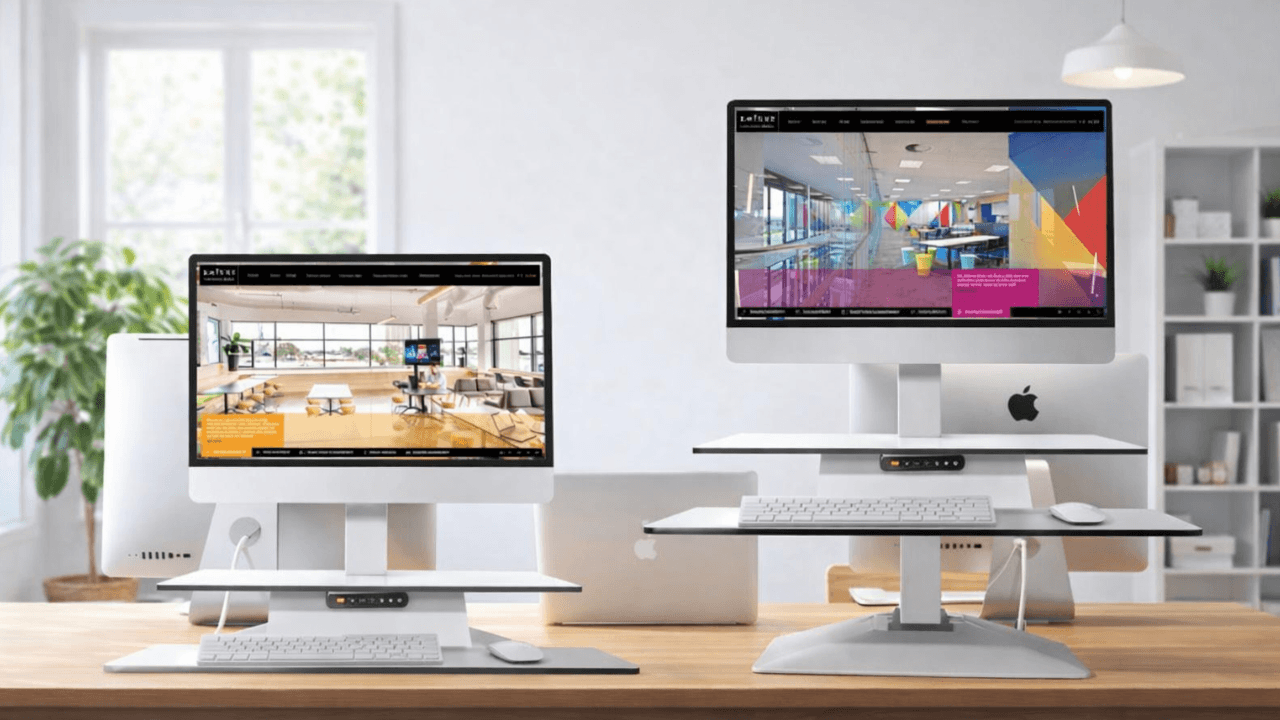
Place your computer screen or monitor in the centre of your desk, at eye level or slightly below. You can use a monitor stand or arm to adjust the height and angle of your screen. Make sure your screen is about an arm’s length away from you and that there is no glare from the lighting.
Keyboard and Mouse Placement
Place your keyboard and mouse on the same level, directly in front of you, and about 10 to 15 cm away from the edge of the desk. You can use a keyboard tray or a wrist rest to support your forearms and wrists. Keep your mouse close to your keyboard, and avoid reaching or twisting your arm to use it.
Most-used Accessories Placement
Use the extra space on your desk to place any other accessories or equipment that you need frequently, such as a phone, a notebook, a pen holder, or a lamp. You can also use desk organisers, bins, or trays to keep your items neat. Avoid cluttering your desk with unnecessary or distracting items.
Storage Solutions
Use the space under or beside your desk to store any items that you don’t often need, such as files, folders, books, cables, or printers. You can use drawers, cabinets, shelves, or baskets to organise your storage space. Make sure you have enough legroom under your desk and that there are no tripping hazards.
Cable Management
Organise the cables around the corner desk. Unplug and untangle all the cables from your devices and power outlets, and label them with stickers or tags to identify them easily. You may also bundle cables that belong to the same device with cable ties, velcro straps, or rubber bands. Remember to leave some slack for movement and flexibility while at it.
Similarly, you can route the cables along the edges of your desk or under the desk with cable clips, adhesive hooks, or cable trays. But avoid crossing or overlapping the cables, and keep them away from sharp corners or edges.
We recommend plugging the cables into a power strip or a surge protector and placing it near your desk or under your desk. Sometimes, a cable box or a basket can help you hide and protect the power strip and the excess cables.
Personalisation
Decorate your desk with items that make you happy and motivated, such as plants, art, photos, or candles. You can also add some colour or texture to your desk with a rug, a chair cushion, or a wall hanging. Make sure your desk reflects your style and personality.
Step 4: Decorating Your Corner Desk

Here are some more ideas to decorate your corner desk with personal touches and flair.
- For effectiveness, you can use a bulletin board, a corkboard, or a magnetic board to display your notes, reminders, quotes, or photos. Similarly, you may use pins, magnets, stickers, or washi tape to add some colour and fun to your board.
- You can use a vase, a jar, or a pot to hold some fresh or artificial flowers, plants, or succulents to purify the air, reduce stress, and boost your mood. Likewise, use a terrarium, a bonsai, or a fairy garden to create a mini oasis on your desk.
- You can use a frame, a canvas, or a poster to hang some art, prints, or paintings on your wall. Better yet, consider the use of a tapestry, a banner, or a flag to cover large areas of your wall. Art can inspire you, express your personality, and make your desk more attractive.
- To improve the smell of your room, you can use a candle, a diffuser, or an aromatherapy device to fill your desk with a pleasant scent. An oil burner, incense holder, or a potpourri bowl can help create a relaxing atmosphere. Remember, a good scent can help you focus, calm you down, and enhance your well-being.
- Finally, you can use a mug, a coaster, or a placemat to hold your favourite drink or snack. Drinks and snacks can help you stay alert, refreshed, and satisfied.
5 Mistakes to Avoid
Some common pitfalls or mistakes when creating your corner desk setup are:
#1. Placing your Desk in a Dark or Cramped Corner
This can make your workspace feel gloomy, claustrophobic, and uninviting. You should choose a corner that has enough natural light, ventilation, and space for you to move around comfortably.
#2. Ignoring the Ergonomic Principles of Your Desk Setup
This can lead to eye strain, neck pain, back pain, wrist pain, and other health problems. You should adjust your desk height, monitor position, keyboard position, mouse position, chair height, and lighting according to your comfort and posture.
#3. Cluttering Your Desk with Unnecessary or Distracting Items
This can reduce your productivity, focus, and creativity. You should keep only the items that you need and use frequently on your desk and store the rest in drawers, cabinets, shelves, or bins. You should also organise your items in a way that makes sense for you and label them if needed.
#4. Forgetting to Personalise and Decorate Your Desk with Your Favourite Items
This can make your workspace feel bland, boring, and impersonal. You should add some colour, texture, art, plants, photos, candles, or other items that reflect your style and personality to your desk. You should also make sure your desk matches the decor of your room.
#5. Connecting Your Corner Desk and Countertop Incorrectly
This can result in gaps, cracks, uneven surfaces, or weak joints. You should use the right tools, materials, and techniques to join your corner desk and countertop securely and smoothly. You should also measure and cut your pieces accurately and align them properly.
Benefits of a Corner Desk Setup
Being a work-from-home employee for over five years, I’ve found that using a corner desk setup has many benefits over a straight one. Here are some of the reasons why:
- More Space: A corner desk setup provides more space than a straight desk setup. You can use the extra space to store your office supplies or to spread out your work.
- Better Ergonomics: A corner desk setup allows you to position your monitor and keyboard in a way that is more ergonomic than a straight desk setup. This can help reduce eye strain and prevent repetitive strain injuries.
- Improved Productivity: A corner desk setup can help you stay organised and focused on your work. You can use the extra space to keep your work materials organised and within reach.
- More Privacy: A corner desk setup can provide more privacy than a straight desk setup. You can position your desk so that you’re facing away from distractions like windows or doors.
- Better Aesthetics: A corner desk setup can look more professional and polished than a straight desk setup. You can use the extra space to add decorative items like plants or pictures.
Using a corner desk setup has been a game-changer for me, and I highly recommend it to anyone who works from home.
Maintaining Your Corner Desk
Setting up your corner desk is an ongoing process, not a one-time event. It is essential to periodically assess what items are essential and what can be removed to maintain a clutter-free workspace and enhance your productivity.
To maintain your corner desk for optimal performance and longevity, you can follow these tips:
- Clean your desk regularly using a damp cloth and mild cleaner. Avoid harsh chemicals or abrasive materials that can damage the surface. Wipe up spills immediately to prevent stains.
- Keep your desk organised. Use trays, folders, bins, or desk organisers to arrange papers and items. Remove or recycle anything unnecessary to prevent clutter.
- Adjust the desk height to support good posture. Your elbows should sit at about a 90-degree angle, and your wrists should remain straight when using a keyboard and mouse. If using a standing desk, alternate between sitting and standing during the day.
- Inspect the desk periodically for damage such as cracks, scratches, dents, or loose parts. Repair or tighten components where possible, and consider applying protective polish or coating to maintain the finish.
- Update desk accessories when needed. Replace broken or outdated equipment and consider adding items that improve comfort or productivity, such as monitor stands, headphones, plants, or lighting.
Frequently Asked Questions (FAQs)
Here are some frequently asked questions when setting up a corner desk.
What are corner desks good for?
Corner desks are good for many reasons. They can help you save space, use the dead space in the corner of a room, and provide more working space and storage space. They can also allow you to work in two different directions, switch between different tasks, and spread your work across two distinct sections. Moreover, corner desks can be ergonomic, stylish, durable, and flexible. They can suit different needs, preferences, and functions. You can find corner desks in different shapes, sizes, colours, materials, and designs.
Is a corner desk setup better than a straight desk setup?
A corner desk setup is a good option for people who want to make use of the corner space in their room and have more storage compartments for their items. However, a corner desk setup may not work well for people who have large or open spaces or who need a lot of working space on their desks.
A straight desk setup is a good option for people who want to have more working space on their desks and more flexibility in their layout. However, a straight desk setup may not work well for people who have small or home offices or who need more storage space for their items.
Which type of corner desk is better for a home corner desk setup?
The best type of corner desk for a home corner desk setup depends on your needs and space. A triangular corner desk is good for small spaces and simple tasks but may not have enough space or storage. An L-shaped corner desk is good for large spaces and multiple tasks but may take up too much space or be uncomfortable. A standing corner desk is good for health and comfort but may be costly or unstable.
How can I make my corner desk more comfortable?
You can make your corner desk more comfortable by doing the following things:
- Adjust your keyboard, mouse, and monitor to match your posture and comfort.
- Use a comfortable and supportive chair that fits your desk and feet.
- Add some accessories or items that make you happy and motivated, such as plants or candles.
- Organise your desk items and cables in a neat and tidy way.
- Choose a suitable corner desk that suits your needs and style.
Are corner desks space-saving?
Corner desks are space-saving because they fit into the unused corners of a room and provide more surface area and storage space than straight desks. Corner desks can also help you optimise your space by allowing you to work in two different directions and switch between different tasks easily. However, corner desks may not suit large or open spaces or people who need a lot of working space or multiple monitors. Therefore, you should consider your needs, preferences, and space before choosing a corner desk.
How is the corner desk area measured before purchasing a corner desk?
To measure the corner desk area before purchasing a corner desk, you should do the following things:
- Measure the length and width of the area where the desk will go. Make sure you have enough space to move around and access the desk comfortably.
- Divide the corner desk into two rectangles and multiply the length by the width of each rectangle to get the area. Add the two areas together to get the total surface area of the corner desk.
- Measure the height of the desk from the floor to the top of the desktop. You should also measure the distance from your elbow to the floor from both a sitting and standing position.
Check the product specifications to see if the desk can reach the desired heights and fit the available space.
 Darren Sherwood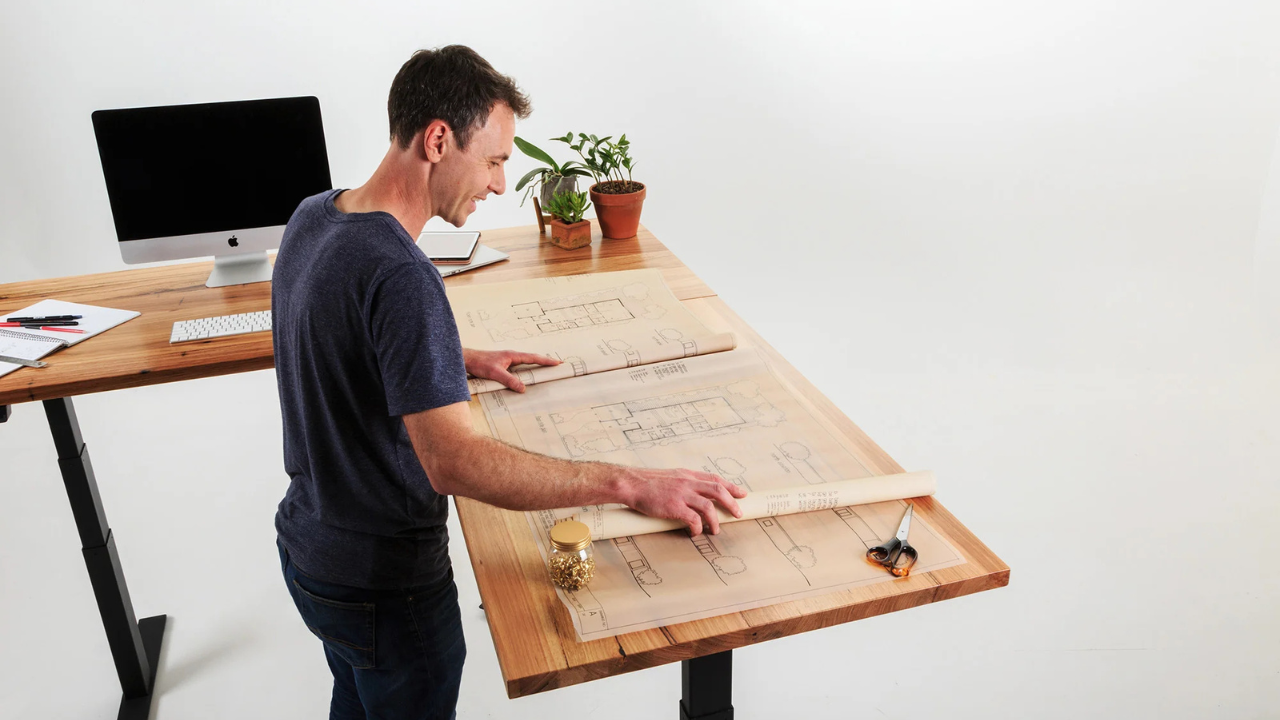
Bottom Line
A corner desk setup can help maximise space, improve productivity, and create a more comfortable home office. With the right desk, chair, and accessories, you can build a workspace that fits your needs and working style.
Use these ideas as a starting point, then adjust and personalise the setup to suit your preferences. A well-organised corner desk can make your workspace more efficient and enjoyable to use.







)
